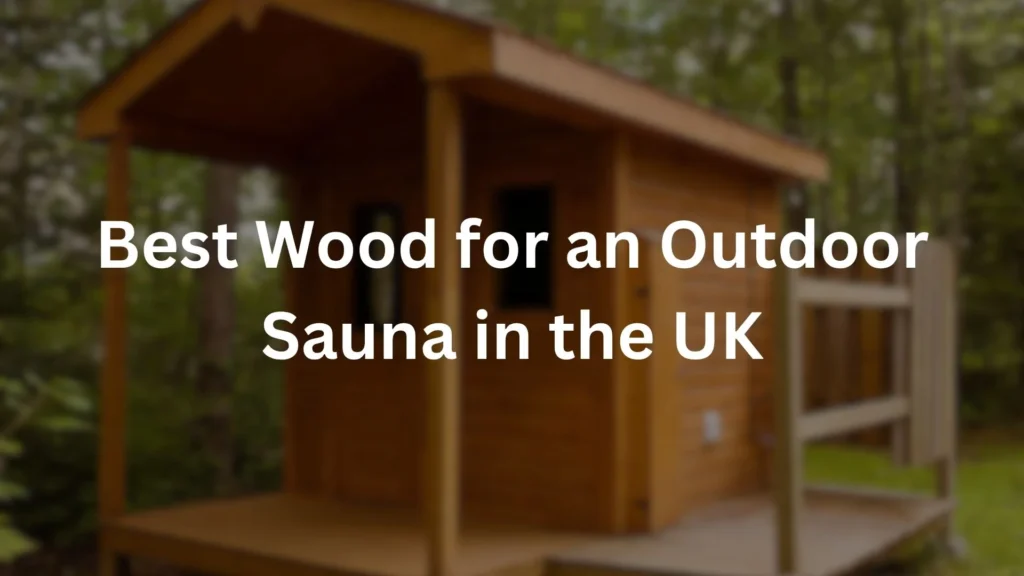
Choosing the right wood for an outdoor sauna in the UK means thinking about two separate jobs: the interior cladding, which needs to handle heat and humidity while staying comfortable to sit against, and the exterior, which needs to stand up to UK weather over years of rain, damp, and temperature swings. These are genuinely different requirements, so the best wood for one isn’t necessarily the best for the other. This guide covers both, with a clear recommendation for each, plus specific notes for horsebox sauna conversions where the original trailer shell already forms part of the exterior.
Interior Cladding: What the Sauna Environment Demands
Inside a sauna, wood needs to handle sustained high heat without releasing resin or becoming uncomfortably hot to the touch, while also coping with regular exposure to steam and humidity.
If you’re thinking about a sauna of your own, see our garden sauna builds in Fife.
Top recommendation: Aspen
Aspen is widely considered the best all-round choice for UK sauna interiors, and for good reason. It stays cool to the touch even at high sauna temperatures, unlike resinous woods. It has no resin content, so it won’t leak sap or produce an unpleasant smell when heated. It’s naturally light in colour and grain, giving a clean, classic sauna look. And it’s widely available from UK sauna timber suppliers, making it a practical default choice.
Strong alternative: Alder
Alder performs very similarly to aspen and is often used interchangeably with it in sauna builds. It offers comparable heat performance to aspen, staying cool and resin-free. It has a slightly warmer tone in its natural colouring, which some people prefer aesthetically. And it’s similar in cost and availability in the UK market.
Also worth considering: Thermally treated (thermo-treated) softwood
This is timber, often spruce or pine, that’s been heat-treated during manufacturing to change its properties before it ever goes into the sauna. Heat treatment removes much of the resin that would otherwise be a problem in untreated pine or spruce. It’s more stable dimensionally, meaning less warping or movement with repeated heat and humidity cycles. And it’s often slightly more affordable than aspen or alder, while still performing well.
What to avoid: Untreated pine or standard softwood
Regular, untreated pine is a common building timber but a poor choice for sauna interiors specifically, since it retains resin that can become sticky and uncomfortable when heated, and it doesn’t handle sustained high humidity as gracefully as sauna-specific timber.
Interior Wood Comparison at a Glance
| Wood Type | Heat Comfort | Resin Content | Cost | UK Availability |
| Aspen | Excellent | None | Moderate | Good, widely stocked by sauna suppliers |
| Alder | Excellent | None | Moderate | Good, similar to aspen |
| Thermo-treated softwood | Very good | Minimal after treatment | Slightly lower | Good, increasingly common |
| Untreated pine/softwood | Poor | High | Lowest | Widely available, but not sauna-appropriate |
Exterior Wood: What UK Weather Demands
The exterior of an outdoor sauna faces a completely different challenge, sustained exposure to rain, damp, UV, and the freeze-thaw cycles that come with a UK climate, without the benefit of the controlled heat inside.
Top recommendation: Thermally modified timber
For exterior cladding specifically, thermally modified timber is generally the strongest all-round performer in UK conditions. It offers significantly improved rot resistance compared to untreated timber, since the heat treatment process changes the wood’s cellular structure. It’s more dimensionally stable, meaning less swelling and shrinking with UK weather fluctuations. And it’s naturally durable without chemical treatment, appealing if you’d rather avoid pressure-treated alternatives.
Strong alternative: Larch
Larch is a naturally durable softwood that’s long been used for outdoor cladding in the UK. It has a naturally higher resin and oil content than most softwoods, giving reasonable natural weather resistance. It ages to an attractive silvery-grey if left untreated, which some people prefer aesthetically. And it’s widely available and well understood by UK timber merchants and builders.
Also worth considering: Cedar
Cedar is a popular choice for outdoor cladding more broadly, sauna exteriors included. It’s naturally rot-resistant due to its oils, without needing chemical treatment. It’s lightweight and easy to work with, which can simplify the cladding process. And it typically costs more than larch or standard thermally modified softwood.
What to avoid: Untreated standard softwood
Using untreated, standard construction-grade softwood on the exterior of an outdoor sauna is a common mistake, since it lacks the natural durability or treatment needed to cope with sustained UK weather exposure, leading to faster rot and a shorter lifespan.
Exterior Wood Comparison at a Glance
| Wood Type | Weather Resistance | Maintenance Needs | Cost | Aesthetic |
| Thermally modified timber | Excellent | Low | Moderate to higher | Warm, even tone |
| Larch | Good | Low to moderate | Moderate | Ages to silvery-grey if untreated |
| Cedar | Very good | Low | Higher | Warm reddish-brown tone |
| Untreated standard softwood | Poor | High | Lowest | Fades and deteriorates quickly |
What This Means for a Horsebox Sauna Conversion
A horsebox conversion has a slightly different relationship with exterior wood compared to a fully timber-built cabin or barrel sauna, since the horsebox’s original metal or composite shell often forms the primary exterior weather barrier already.
If the horsebox shell is sound, exterior wood choice becomes more about aesthetic cladding or trim rather than the primary weatherproofing, since the trailer’s original construction is already handling that job. If you’re adding external timber cladding over the original shell for a different look, the same exterior wood recommendations above apply, particularly thermally modified timber or larch for durability. Interior cladding recommendations apply fully, regardless of it being a horsebox conversion, since the interior environment, heat and humidity, is the same as any other sauna type.
This is one of the practical advantages of starting with a horsebox shell, much of the exterior weatherproofing job is already handled by the original trailer construction, letting you focus your wood choice primarily on the interior cladding where it matters most for comfort and sauna performance.
A Simple Way to Choose
For interior cladding, aspen or alder are the safest, most proven choices for UK sauna builds, with thermo-treated softwood as a solid, slightly more affordable alternative.
For exterior cladding, if adding it over a horsebox shell, or building a cabin or barrel sauna, thermally modified timber offers the strongest all-round durability for UK weather, with larch as a well-established, naturally resistant alternative.
Frequently Asked Questions
What’s the best wood for the inside of a UK outdoor sauna?
Aspen and alder are the most widely recommended choices, since both stay cool to the touch and don’t release resin when heated, with thermo-treated softwood as a solid alternative.
Can I use the same wood inside and outside a sauna?
It’s not generally recommended, since interior wood needs to handle heat and humidity comfortably, while exterior wood needs to withstand ongoing weather exposure, and few timbers excel at both jobs equally well.
Is cedar a good choice for a UK outdoor sauna?
Yes, cedar performs well as an exterior cladding choice due to its natural rot resistance, though it tends to cost more than larch or thermally modified timber.
Do horsebox sauna conversions need exterior cladding wood?
Not necessarily, since the horsebox’s original shell often already provides weatherproofing, though exterior timber cladding can be added for aesthetic reasons using the same durable wood types recommended for any outdoor sauna.
Why shouldn’t I use untreated pine for a sauna?
Untreated pine contains resin that can become sticky and uncomfortable when heated, and it doesn’t cope as well with sustained humidity as sauna-specific timber like aspen or alder.
Is thermally modified timber worth the extra cost over standard softwood?
Generally yes, particularly for exterior use, since the improved rot resistance and dimensional stability significantly extend the timber’s lifespan compared to untreated standard softwood.
Final Thoughts
Getting sauna wood right in the UK comes down to matching the timber to the job it’s actually doing, aspen or alder inside, where heat comfort and resin-free performance matter most, and thermally modified timber or larch outside, where standing up to UK weather is the priority.
For a horsebox sauna conversion specifically, the original trailer shell often takes care of much of the exterior weatherproofing already, meaning the wood choice that matters most is the interior cladding, where getting it right makes the real difference to comfort every time the sauna is used. Taking the time to source properly graded, well-prepared timber from a reputable supplier, and understanding how each species behaves over years of regular use, pays off in a sauna that stays comfortable and looks good long after the initial build is finished.