How long a garden sauna takes to build depends heavily on which type you’re going for, a pre-built kit cabin, a barrel sauna, or a horsebox conversion, and whether you’re doing the work yourself or bringing in a professional. Each option starts from a different point, which has a big effect on the overall timeline, so it’s worth comparing them properly rather than assuming one general timeframe applies across the board. This guide breaks down realistic timelines for each type, comparing DIY against professional installation throughout.
At Fife Premier Handyman Services, we take on horsebox sauna conversion work across Fife, so alongside covering kit and barrel saunas generally, this guide draws on real experience for horsebox-specific timelines where that comparison is most relevant.
If you’re thinking about a sauna of your own, see our garden sauna builds in Fife.
Why Timeline Varies So Much by Sauna Type
Each type of garden sauna starts from a completely different point, which is the main reason timelines differ so significantly. Kit and cabin saunas arrive as a defined, pre-designed product, with most of the manufacturing already done before it reaches you. Barrel saunas are similarly pre-built or supplied as a structured kit, following an established design. Horsebox conversions start from a secondhand trailer that needs to be assessed, stripped out, and built up from scratch, with no standard “kit” to follow.
This difference in starting point explains most of the variation in timeline between the three options, more than any other single factor.
Timeline Comparison at a Glance
| Sauna Type | DIY Timeline | Professional Timeline |
| Kit/cabin sauna (pre-assembled delivery) | A day or two for setup and base preparation | A day, often including delivery and positioning |
| Kit/cabin sauna (flat-pack, self-assembly) | A few days to a week | A couple of days |
| Barrel sauna | A few days for assembly and setup | A day or two |
| Horsebox conversion | Several weeks to a couple of months | A few weeks, depending on repairs needed |
Kit and Cabin Sauna Timelines
Kit saunas are generally the fastest option to get up and running, since much of the construction work has already been done by the manufacturer before it arrives.
Pre-assembled delivery
If you choose a pre-assembled cabin that arrives largely complete, the main on-site work is preparing a base and positioning the structure, connecting any electrics, and finishing touches. This can often be done within a day or two, assuming the base has been prepared in advance.
Flat-pack, self-assembly kits
These require more on-site building time, since panels, benches, and fittings need to be assembled from a kit. A confident DIYer can often complete this within a few days to a week, while a professional installation team typically moves through the same process in a couple of days, given experience with the specific assembly process.
What affects kit sauna timelines: whether the base or foundation is already prepared before delivery, the complexity of electrical connection if choosing an electric heater, and the size of the cabin, since larger kits naturally take longer to assemble.
Barrel Sauna Timelines
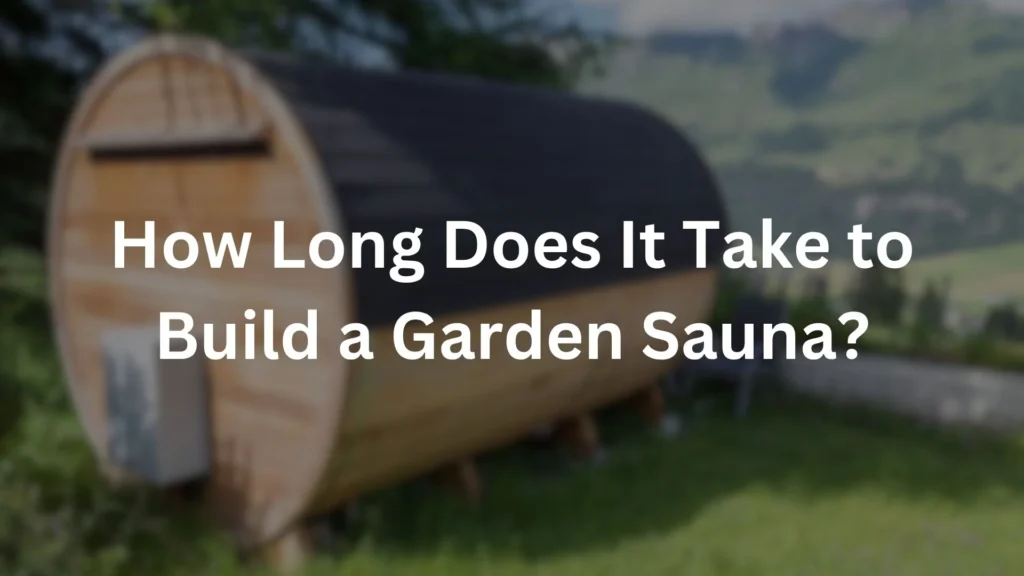
Barrel saunas follow a similar pattern to kit cabins, since they’re also a pre-designed product rather than a from-scratch build.
DIY assembly
Depending on the specific product and whether it arrives pre-built or as a kit, DIY assembly of a barrel sauna typically takes a few days, covering positioning, any final assembly work, and heater installation.
Professional installation
A professional team can often complete a barrel sauna installation in a day or two, particularly if it arrives largely pre-built and the main task is positioning and connecting services.
What affects barrel sauna timelines: whether the unit arrives pre-built or requires kit assembly, base preparation since a level foundation needs to be ready beforehand, and heater installation complexity, depending on wood-fired or electric choice.
Horsebox Conversion Timelines
This is by far the most variable option, since it depends on the condition of the trailer you start with, rather than following a standard, predictable process like a kit product.
Full DIY, done in spare time
This typically takes the longest, often stretching over several weeks to a couple of months, particularly if structural repairs are needed or it’s your first time doing joinery work of this kind. The framing and cladding stages tend to take significantly longer for a first-time DIYer compared to someone experienced with this kind of build.
Professional horsebox conversion
A professional can generally complete a horsebox conversion in a few weeks, though this still depends heavily on the trailer’s starting condition. A trailer needing significant floor or chassis repair adds real time regardless of who’s doing the work, while a trailer already in good structural shape allows the build to move through insulation, cladding, and benches more quickly.
What affects horsebox conversion timelines: the condition of the trailer, particularly the floor, chassis, and roof, the size of the horsebox since more internal space means more insulation and cladding work, the level of customisation, with simple layouts moving faster than bespoke, multi-tier designs, and whether an electrician is needed for a new power supply.
Why Horsebox Conversions Take Longer Than Kit Options
The main reason horsebox conversions take considerably longer than kit or barrel saunas comes down to the fact that there’s no standard starting point. A kit cabin or barrel sauna is designed and pre-manufactured to a known specification, so installation is a relatively predictable process. A horsebox conversion, by contrast, starts with an assessment of an existing structure that wasn’t originally built for this purpose, meaning repairs, custom framing, and bespoke cladding all need to be worked out and built specifically for that trailer, which naturally takes longer than assembling a pre-designed product.
DIY vs Professional: Where the Time Difference Is Biggest
Across all three sauna types, the gap between DIY and professional timelines tends to be most pronounced in horsebox conversions, for a clear reason: kit and barrel saunas are largely about following a defined assembly process, which doesn’t vary hugely in skill level required, while a horsebox conversion involves genuine bespoke joinery, particularly in the framing and cladding stages, where experience makes a much bigger difference to both speed and quality of the finished result.
| Sauna Type | Typical DIY vs Professional Time Difference |
| Kit/cabin sauna | Small difference, since assembly process is defined |
| Barrel sauna | Small to moderate difference |
| Horsebox conversion | Large difference, especially in framing/cladding stages |
Factors That Can Extend Any Timeline
Regardless of sauna type, a few things commonly push timelines beyond initial expectations. Delivery delays for kit or barrel sauna components are a common culprit. Base or foundation issues discovered once ground preparation begins can also add time. Electrical work scheduling, particularly if a new supply needs to be run to the site, is another factor. Weather delays, especially for outdoor assembly work during colder or wetter months, can push things back too. And underestimating the skill level required, particularly for horsebox conversions attempted without prior joinery experience, is one of the most common causes of a timeline stretching well beyond initial expectations.
Choosing Based on Your Timeline Priorities
If getting a sauna up and running quickly is your main priority, a pre-assembled kit cabin or barrel sauna generally offers the fastest route, particularly with professional installation. If you’re happy to invest more time in exchange for a more customised, unique result, and potentially better value depending on the trailer you find, a horsebox conversion is a reasonable trade-off, provided you go in with realistic expectations about the time involved.
Timeline Differences Between Electric and Wood-Fired Heater Installation
Heater choice adds its own small but real variable to the overall timeline, regardless of which sauna type you’re building. Fitting an electric heater, provided power is already reasonably close to the sauna’s location, tends to be a relatively quick addition to the overall build, often completed within a day once wiring is run and certified by a qualified electrician. If a new electrical supply needs to be run from further away, this can add a noticeable amount of time to the project, particularly if groundwork or trenching is needed to get cabling safely to the site.
A wood-burning stove installation typically takes a bit longer than a straightforward electric hookup, since it involves fitting a flue through the roof with correct clearances, along with hearth protection beneath and around the stove itself. This isn’t a huge addition to the overall timeline for a kit or barrel sauna, but it’s still worth factoring in as a distinct stage rather than assuming heater installation is a uniform, interchangeable step regardless of which type you choose.
How Seasonal Timing Affects Your Project
The time of year you start a garden sauna project, particularly a horsebox conversion involving outdoor or semi-outdoor working conditions, can meaningfully affect how smoothly the timeline progresses. Cold, wet winter weather can slow down stages that involve extended time spent working outdoors or in an unheated garage or driveway space, particularly cutting and fitting cladding, which benefits from stable, dry conditions to avoid timber movement issues later. Starting a DIY conversion in spring or early summer, when weather is generally more cooperative and daylight hours are longer, often allows for steadier progress than attempting the same project through the darker, colder months.
This is less of a factor for kit and barrel sauna installation, since the bulk of the manufacturing has already happened indoors at the supplier’s facility before delivery, meaning the on-site work is comparatively brief regardless of season. For a horsebox conversion specifically, though, it’s worth being realistic about how much slower certain stages may progress if you’re tackling them during a Scottish winter, and building some extra buffer time into your expectations accordingly.
Coordinating Multiple Trades or Deliveries
For any sauna build involving more than one type of specialist input, an electrician for wiring, a supplier delivering a kit or barrel sauna, or a separate contractor handling base preparation, the overall timeline depends partly on how well these different elements are coordinated rather than purely on how long each individual task takes in isolation. A kit sauna delivery that arrives before the base is properly prepared, for example, can sit waiting on site rather than being installed straight away, effectively adding dead time to the project that has nothing to do with the actual installation work itself.
Planning the sequence of these different elements properly from the outset, rather than booking each one independently without checking how they fit together, tends to produce a noticeably smoother and faster overall project than leaving this coordination to chance. This is particularly relevant for a horsebox conversion involving several distinct stages and potentially multiple people or trades, where a clear running sequence agreed in advance helps avoid one delayed stage holding up everything that follows it.
Planning Your Own Schedule Around the Build
Beyond the raw build time itself, it’s worth thinking about how a garden sauna project fits around your own schedule and commitments, since this affects how quickly a DIY build in particular actually progresses in practice. A DIY horsebox conversion tackled purely in evenings and weekends will naturally take longer in calendar time than the same amount of actual working hours spread across full, uninterrupted days, simply because momentum and continuity matter for this kind of joinery work. Picking up a partially completed framing or cladding job after a week away can mean spending extra time re-familiarising yourself with where you left off, compared to working through the same stage in a continuous block.
If your own availability is limited to occasional weekends, it’s worth building this into your timeline expectations from the outset, rather than comparing your likely calendar time against a professional’s working-day estimate and assuming you should be able to match it. Being realistic about your own pace, rather than an idealised version of how quickly the work could theoretically be done, tends to produce a far more accurate personal timeline.
How Booking a Professional Affects Your Timeline
For anyone going the professional route, whether for a kit sauna installation, a barrel sauna, or a horsebox conversion, it’s worth remembering that the professional’s own workload and scheduling can affect when your project actually starts, separate from how long the work itself takes once underway.
A busy tradesperson or installation team may have a booking lead time of several weeks or more before they can begin your specific project, particularly during peak seasons when garden improvement work tends to be in higher demand. Factoring this lead time into your overall expectations, alongside the build time itself, gives a more complete picture of when you can realistically expect to be using your finished sauna, rather than counting only from the day work actually begins on site.
Setting Realistic Expectations for a Horsebox Conversion
Since horsebox conversion timelines vary so much depending on the specific trailer, it’s worth getting a proper assessment of your horsebox’s condition before setting expectations, rather than assuming a general timeframe will apply to your specific situation. This is exactly the kind of scoping Fife Premier Handyman Services does before starting a horsebox sauna conversion, giving a realistic timeline based on the trailer’s actual condition and your desired finish, rather than a generic estimate that doesn’t reflect your specific starting point.
Frequently Asked Questions
What’s the fastest type of garden sauna to build?
A pre-assembled kit cabin or barrel sauna is generally the fastest option, since much of the construction is already completed before it arrives on site.
Why do horsebox conversions take longer than kit saunas?
Because there’s no standard starting point, a horsebox conversion involves assessing and building up an existing trailer from scratch, while kit and barrel saunas follow a pre-designed, pre-manufactured process.
Is it faster to hire a professional for a garden sauna build?
Generally yes, particularly for horsebox conversions, where experienced joinery makes a significant difference to timeline, though the gap is smaller for kit and barrel saunas, which follow a more defined assembly process.
Can a horsebox conversion ever be as fast as a kit sauna?
It’s unlikely, since even a well-conditioned trailer requires custom framing, insulation, and cladding work, which takes longer than assembling a pre-manufactured kit product.
What’s the biggest factor affecting horsebox conversion timelines specifically?
The starting condition of the trailer, particularly the floor, chassis, and roof, since structural repairs can add significant time regardless of DIY or professional approach.
Should I get a timeline estimate before starting a horsebox conversion?
Yes, since timelines vary so much by trailer condition, getting a proper assessment before committing gives a much more realistic sense of how long your specific project will take.
Final Thoughts
Timeline for a garden sauna build comes down almost entirely to which type you choose, kit cabins and barrel saunas offer a faster, more predictable process since they’re pre-designed products, while horsebox conversions take considerably longer due to the custom joinery and potential structural repair work involved. Neither route is inherently better, but knowing what timeline to realistically expect for your chosen type helps you plan properly, whether that means booking time off for a DIY weekend project or setting expectations for a multi-week professional conversion.