Most homes have a loft that does nothing more than sit above the ceiling collecting dust. Loft boarding is one of the simplest ways to turn that space into somewhere you can safely store things, but it is not free, and it is not right for every house. Before you spend money, it helps to know what you actually get, what it costs you, and where the pitfalls are.
This guide gives an honest answer to whether loft boarding is worth it. It covers the benefits, the downsides, the insulation question that catches many people out, and a few simple checks to run before you decide. At Fife Premier Handyman Services, we carry out loft boarding across Fife, so the advice here reflects what we see in real homes, including the jobs where boarding is a great idea and the odd one where we suggest holding off.
If you’d like it done for you, see our loft ladders and loft boarding in Fife.
What Loft Boarding Gives You
More Storage Space
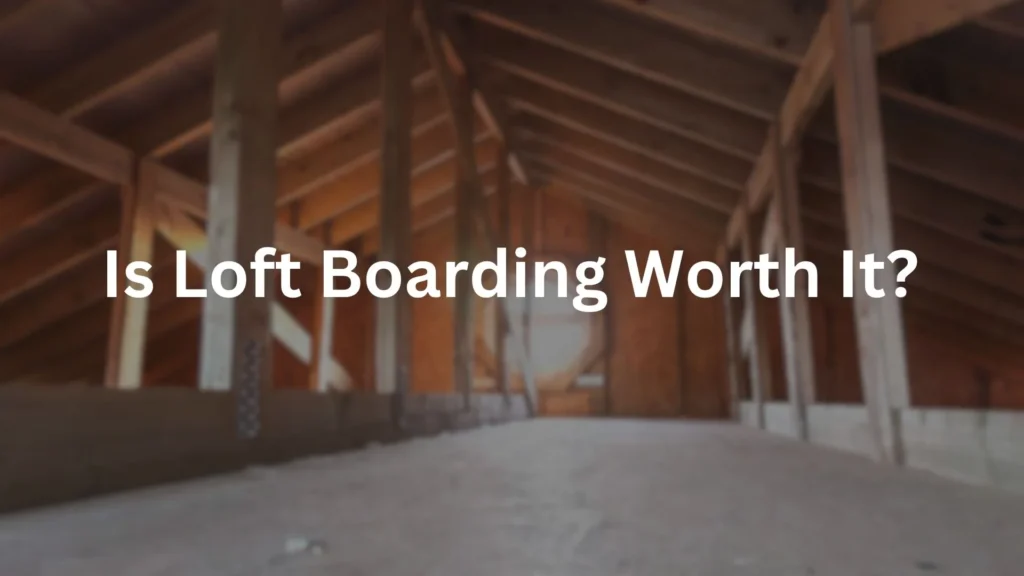
This is the main reason people board their lofts. A boarded loft gives you a flat, solid floor for the things that clutter up the rest of the house, such as suitcases, Christmas decorations, spare bedding, camping gear and boxes of keepsakes. Without boarding, you can only step on the joists, which is awkward and unsafe, and nothing can be stored there with confidence.
Less Clutter Elsewhere
Moving seasonal and rarely used items upstairs frees up wardrobes, garages, spare rooms and under-bed space. Many homeowners find the benefit is less about the loft itself and more about the room that opens up everywhere else.
Safer Access to the Space
Boarding the area around the hatch means you are not balancing on joists while carrying boxes. A boarded walkway and storage zone make every trip into the loft safer, especially when paired with a proper loft ladder and some lighting.
Appeal When Selling
Buyers often like homes with usable storage, and a boarded loft with a ladder and light can be a small plus. That said, it is best not to expect boarding to add a fixed amount to your home’s value. Think of it as a practical improvement for your own use first, and a possible selling point second.
What Loft Boarding Costs You
Money
The price depends mainly on the size of the area, the type of boarding you choose and how easy the loft is to work in. Basic chipboard boarding sits at the lower end, while raised boarding systems cost more because of the extra supporting frame. Awkward access, low headroom and obstructions such as water tanks can add labour time. We cover this in more detail in our guide to what loft boarding costs in the UK.
Time and Disruption
A typical boarding job is completed quickly compared with most home improvements, but it does mean someone working in your loft and moving items in and out. If your loft is already full, you will need somewhere to put things during the work.
Flexibility
Boarding is permanent storage, but it can reduce flexibility if you later want to upgrade insulation, run new cables or convert the space. It is worth thinking a few years ahead before boarding the whole area.
The Insulation Question
This is the single most important thing to understand before you board a loft. In most UK homes, the insulation sits between and often over the ceiling joists. If boards are laid straight on top of the joists, they press down on the insulation and squash it.
Insulation works by trapping air in its fibres. When it is compressed, much of that trapped air is lost, and the insulation does a poorer job of keeping heat in your home. Over time, this can mean higher heating bills that quietly cancel out the benefit of the extra storage.
The proper solution is a raised loft boarding system. A supporting frame sits above the joists and the insulation, and the boards are fitted on top of that frame. The insulation stays at full thickness and the boarding sits level and stable. It costs more than basic boarding, but it protects your home’s energy performance.
So if your loft already has decent insulation, a raised system is usually the right choice. If your insulation is thin, it often makes sense to top it up first and then board over the top with a raised frame in one go.
Basic Boarding or Raised Boarding?
| Feature | Basic boarding | Raised boarding system |
| Cost | Lower | Higher |
| Effect on insulation | Can compress it | Keeps it at full thickness |
| Finish | Functional | Level and neat |
| Best for | Small, simple storage needs | Lofts with deeper insulation and longer term use |
When Loft Boarding Is Worth It
Loft boarding tends to pay off when:
- You are genuinely short of storage and have clutter in other rooms
- Your loft is easy to reach, with a decent hatch and enough headroom
- You are happy to invest in a raised system so your insulation is protected
- You plan to use the space regularly for lighter, bulky items
- You want safer access, and are also thinking about a proper ladder and lighting
When It May Not Be Worth It
Honest advice sometimes means saying no. Loft boarding may not be the best idea when:
- The roof space is very low or cramped, so you can barely use the boarded area
- Your insulation is thin and you do not plan to improve it, since boarding could make things worse
- The roof is in poor condition, with leaks or damp that need fixing first
- You only need to store a handful of small items, in which case a few boards near the hatch may be plenty
- You are planning a loft conversion soon, because any boarding done now may need to be removed
In several of these cases, partial boarding is a sensible compromise. Boarding just the area around the hatch gives you useful storage and a safe place to stand without covering the whole loft.
Safety and Practical Checks
Before boarding, a few simple checks help avoid problems later.
Weight Limits
Ceiling joists in many homes were designed to carry the ceiling below, not heavy storage. Boarding is best for light and medium items. Avoid piling very heavy objects, such as stacks of books or old equipment, onto the boards. If you are unsure what your loft can take, ask a professional to look at the joists.
Ventilation
A roof space needs airflow to avoid damp and condensation. Boards and insulation should not block the ventilation gaps at the eaves. A careful installer keeps these clear.
Wires and Pipes
Cables and pipework should be checked before boards go down. They should not be trapped, squashed or left in places where boards could damage them. If you have any concerns about wiring, speak to an electrician first.
Water Tanks
If you have a water tank in the loft, boards need to be fitted around it safely, and pipes should stay properly insulated so they do not freeze in cold weather.
The Hatch and Ladder
A boarded loft is only as safe as the way you get into it. A sturdy loft ladder, a wide enough hatch and a handrail make a real difference, particularly when carrying boxes.
Ways to Get More Value
If you decide to go ahead, a few small extras can make a boarded loft far more useful.
- Add lighting, so you can see what you are doing and find things quickly
- Fit a proper loft ladder, which is safer than an old pull down ladder that has seen better days
- Board in zones, such as a walkway plus a storage area, rather than the entire loft
- Use clear, labelled storage boxes, which keep the space tidy and make items easy to find
Boarding vs a Loft Conversion
It is easy to confuse the two. Boarding creates a safe floor for storage. A loft conversion turns the space into a proper room, such as a bedroom or office, and that is a much bigger project involving stairs, insulation, windows, fire safety and formal approval. If you want a room, boarding is not the right solution. If you want storage, boarding is usually the practical, affordable answer.
How to Decide
A quick way to weigh it up:
- Decide what you need the space for, such as storage for seasonal items or a safe place to stand
- Check your insulation, and decide whether it needs topping up
- Look at the loft access, including the hatch, ladder and headroom
- Choose between basic and raised boarding, with insulation in mind
- Get a proper quote, so you know the real cost for your loft rather than a rough guess
Getting Advice in Fife
Whether loft boarding is worth it often comes down to the details of your own loft, such as its size, insulation, headroom and access. A quick look in person can answer in minutes what is hard to judge from the ground.
Fife Premier Handyman Services can assess your loft, advise on whether basic or raised boarding suits it, and provide a clear quote for the work. We can also look at your loft ladder and lighting, so the whole space works well together.
Frequently Asked Questions
Is loft boarding worth it for storage?
For most homes that are short on space, yes. A boarded loft gives you a solid, safe area for lighter items and frees up space in other rooms, as long as the boarding is done in a way that protects your insulation.
Does loft boarding reduce insulation?
It can, if boards are laid straight over the joists and compress the insulation. A raised boarding system avoids this by keeping the boards above the insulation layer, so it stays at full thickness.
Does loft boarding add value to a house?
It can make a home more appealing because buyers like usable storage, but it is not guaranteed to add a set amount to the value. It is best seen as a practical upgrade for your own use first.
Is it better to board the whole loft or part of it?
It depends on how much you need to store. Many people find that boarding a walkway and a storage zone is enough, and it keeps costs down while still giving you a safe, usable space.
How much weight can a loft floor hold?
That depends on your joists and how the loft was built. Ceiling joists are often designed to carry the ceiling rather than heavy loads, so boarding is best used for light to medium items unless a professional confirms the structure can take more.
Do I need a loft ladder if I board my loft?
It is strongly recommended. A proper ladder with a handrail makes it much safer to carry things up and down, and it helps you get full use out of the boarded space.
Can I board a loft myself?
Some people do, but it involves working in a cramped space, handling insulation and making sure the boards are fixed safely. If you are not confident, a professional installation helps avoid compressed insulation, blocked ventilation and damaged cables.
Final Thoughts
Loft boarding is worth it for many homes, especially where storage is tight and the loft is easy to use. The gains are real: more space, less clutter and safer access. The risks are just as real if the job is done badly, particularly when insulation is compressed or the joists are overloaded. Choose the right type of boarding, protect your insulation, keep the roof space ventilated and be sensible about what you store. Done that way, a boarded loft can be one of the most practical improvements you make to your home.